Interview series – Discover the SPRINGS project

Dr Vanessa Harris, SPRINGS Coordinator
Infectious Disease Specialist, Amsterdam University Medical Centre
Can you introduce the project and its progression over the past 18 months?
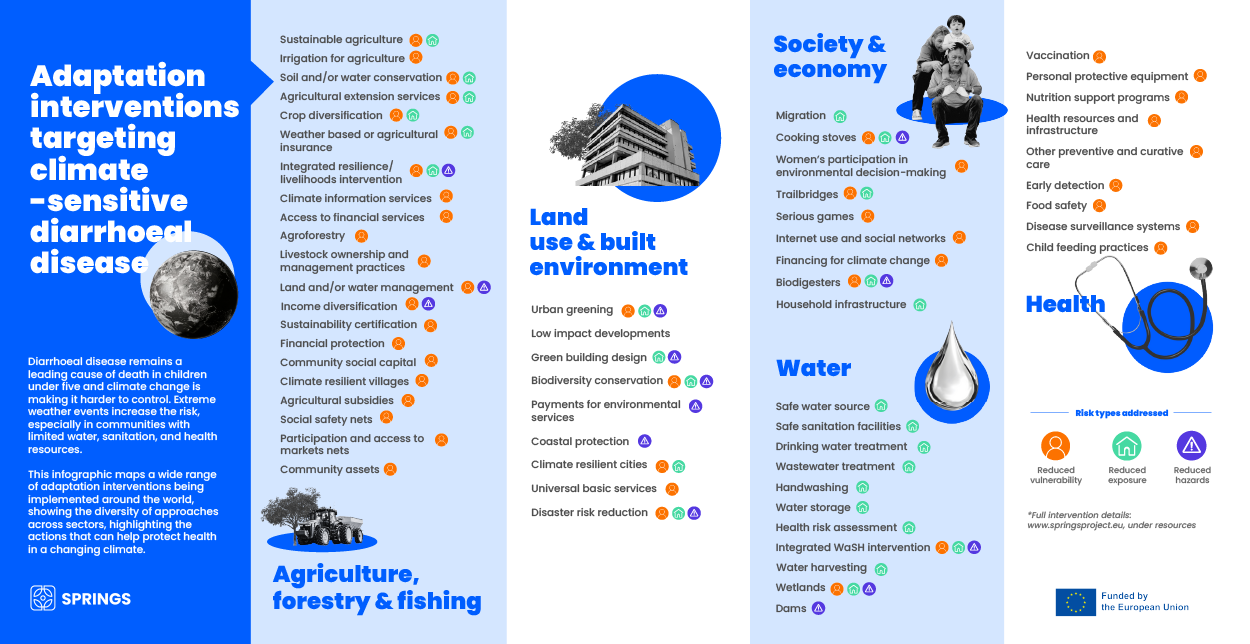
It has been an inspiring 18 months since SPRINGS began, and a real pleasure to see how all the scientists in our consortium have come together to improve our understanding of how climate change will impact water quality, water quantity, and the risk of diarrheal disease.
Because our disciplines are so diverse, we have had to learn to speak a common language — but this has not slowed our progress. We have engaged with students, teachers, and caregivers in communities such as Akuse, Ghana, to learn how they perceive climate change, water, and diarrheal disease.
We have begun collecting drinking water samples and tracking diarrheal disease at our case study sites in Naples, Italy, and Haydom, Tanzania. We are also assessing drinking water quality in Timisoara, Romania. In parallel, we have started evaluating interventions across environmental and health sectors, working closely with local stakeholders to identify approaches that are both effective and contextually appropriate — both for today and for the future.
What do you think the Cluster can bring to your project?
The Planetary Health Cluster is an exciting resource for us. We have shared challenges, and we hope to develop shared solutions — from improving our understanding of how risks for antimicrobial resistance intersect with the risk of diarrheal disease, to exploring how environmental degradation and biodiversity loss affect water quality in places like Tanzania. Just as importantly, we aim to amplify our impact by speaking to policymakers with a unified voice.
How do you expect the Cluster’s activities to support EU policy actions?
We hope that the activities of our cluster — consolidating knowledge from five consortia — will provide concrete examples to the EU Commission of where action and policy are urgently needed to protect planetary health. This means not only safeguarding human health, but also preserving the ecosystems and environments upon which a healthy future depends.
Learn more about SPRINGS: https://www.springsproject.eu
Interview series
Read more from Cluster projects GoGreen Next – PLANET4HEALTH – MOSAIC – TULIP