Scientific Article: Nature-Based Solutions for Removal of Microplastics from Wastewater: Technologies, Challenges, and Prospects
Authors
Casper Boongaling Agaton
Affiliations & Notes
Department of Community and Environmental Resource Planning, College of Human Ecology, University of the Philippines Los Baños, Los Baños 4031, Philippines
Abstract
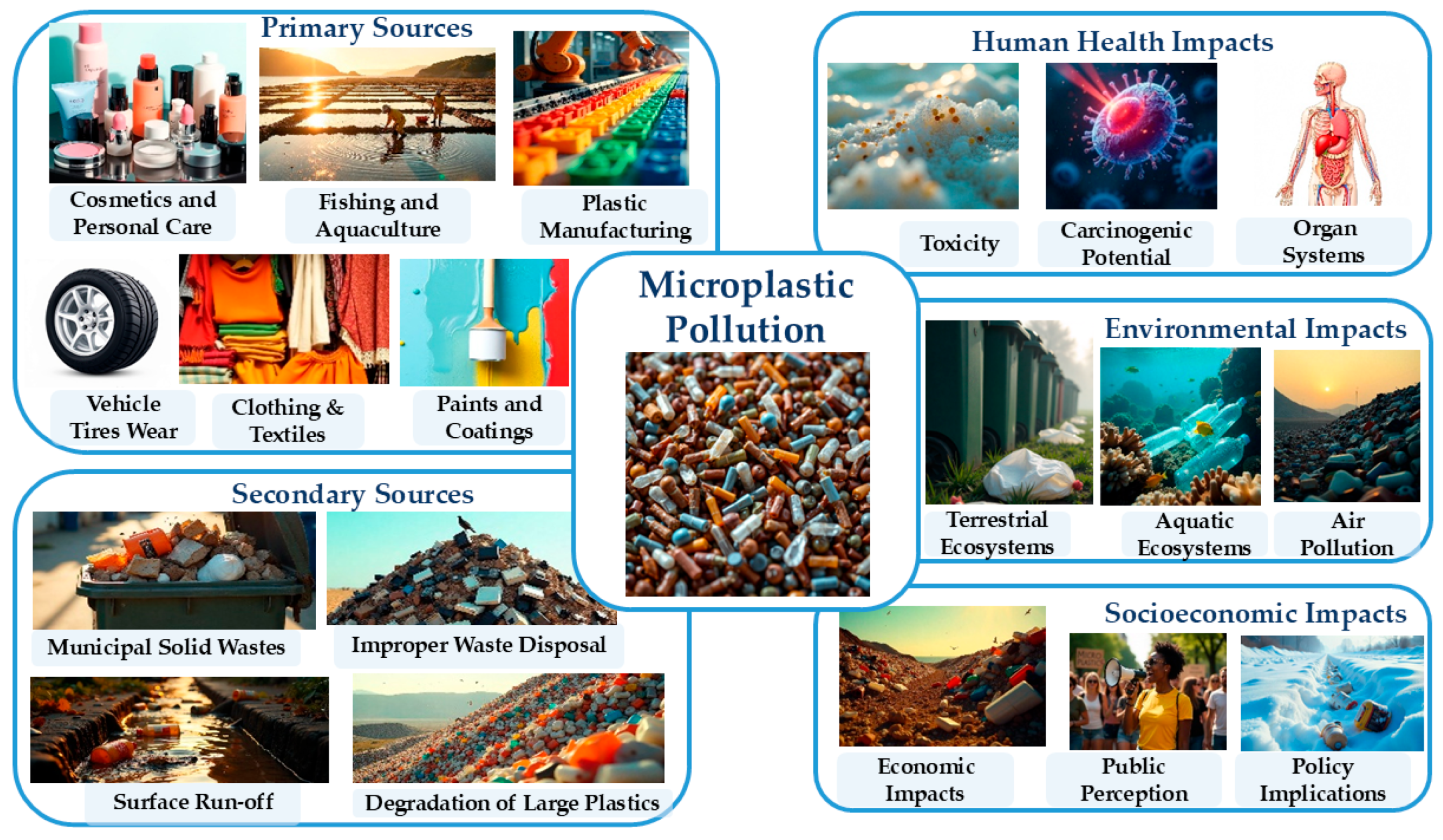
Microplastic pollution has emerged as a serious societal concern, posing risks to the environment, human health, and economies. Conventional wastewater treatment processes remove microplastics at various levels from physical removal (primary), biological degradation (secondary), and contaminant-specific removal (tertiary treatment). Nature-based solutions (NbSs) offer an ecologically friendly alternative that utilizes nature to remove microplastics from wastewater. Recent reviews either focus broadly on NBSs for wastewater, technological solutions for microplastics, or NbSs for microplastics, but rarely connect them systematically. This review presents an integrated review of the sources and impacts of microplastic pollution, NbS technologies for the removal of microplastics, challenges and prospects in utilizing NbSs, and the knowledge gaps. Primary sources of microplastics are intentionally produced at microscopic sizes, while secondary sources originate from the disintegration of larger plastic debris. Among the NbS technologies are constructed wetlands (horizontal subsurface flow, vertical flow, surface flow, microbial fuel cells, multistage) with up to 100% efficiency; green infrastructures (bioretention systems, green walls, permeable pavements, retention ponds) with up to 99% efficiency; macrophytes and microphytes with up to 94% microplastic removal rate. Despite the ecosystem services provided by NbSs, they are challenged by the decrease in efficiency in removing other contaminants, detection and evaluation of NbS performance, and non-technical factors (operations and maintenance, public acceptance, climate risks, and financing). The findings present insights on further research and policy recommendations aimed at facilitating the integration of NbSs into existing frameworks for the removal of microplastics from wastewater, promoting research and innovation, and ensuring sustainable practices for sustainable management of water resources.