Women Leadership in Planetary Health Cluster Projects

Women Leadership in Planetary Health Cluster Projects

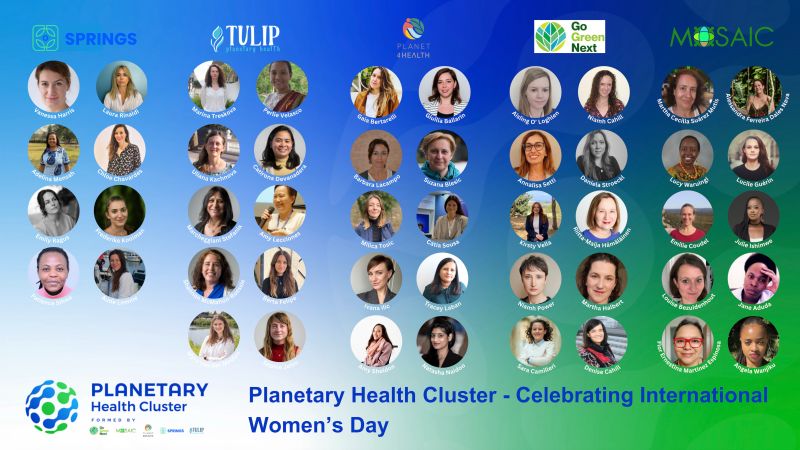
Planetary health above all topics should be representative of the global population and at least speak with a voice that is deemed representative. EU projects are recommended to ensure a minimum of 40% of roles are for Women in the research context. What will become clear is that our five projects representing the Planetary Health Cluster showcase Women in Science and Innovation. For the TULIP project, Women comprise almost 60% of the 64 members of the consortium.

Women represent 45% of the Planet4Health team of 85 people. In SPRINGS, the proportion is 41% of the team of 63 with Women accounting for  50% of hired PhDs and postdoctoral researchers. These projects are distinctive in all having Women leaders with project coordinators Suzana Blesic (Planet4Health), Vanessa Harris (SPRINGS), and Gaia Bertarelli (TULIP). The MOSAIC project led by Emmanuel Roux, has an equal gender balance across its team of approximately 120 researchers.

Uniquely, in GoGreen Next led by Tadhg MacIntyre, all the leads of the pilot sites comprising cities and regions are Women, and the representation of Women across the consortium is 63%. Overall, our projects have a 53:47 females to males ratio. The Planetary Health Cluster is certainly healthy in this regard with a high proportion of Women among the WP leads, city and regional leads and early stage researchers. Thanks to European Health and Digital Executive Agency (HaDEA) for support. 
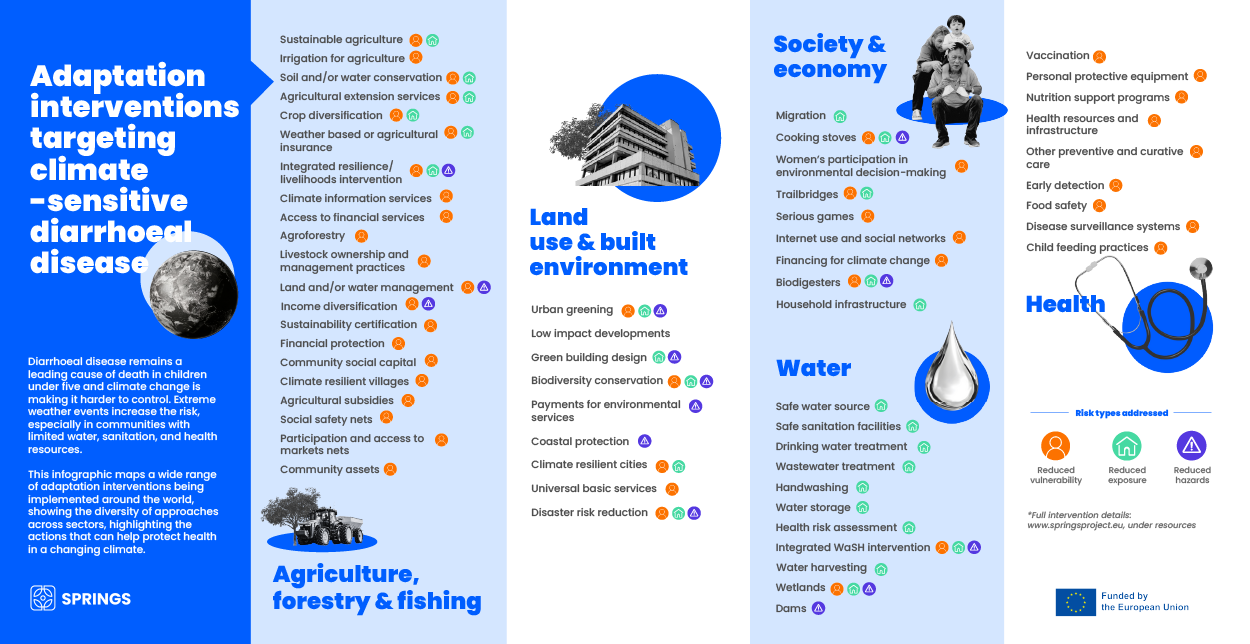
Mapping adaptation interventions for climate-sensitive diarrhoeal disease

Blog

Mapping adaptation interventions for climate-sensitive diarrhoeal disease

This article introduces a new SPRINGS mapping that brings together cross-sectoral adaptation interventions, offering a foundation for more integrated climate-resilient health decision-making.
Find Out More
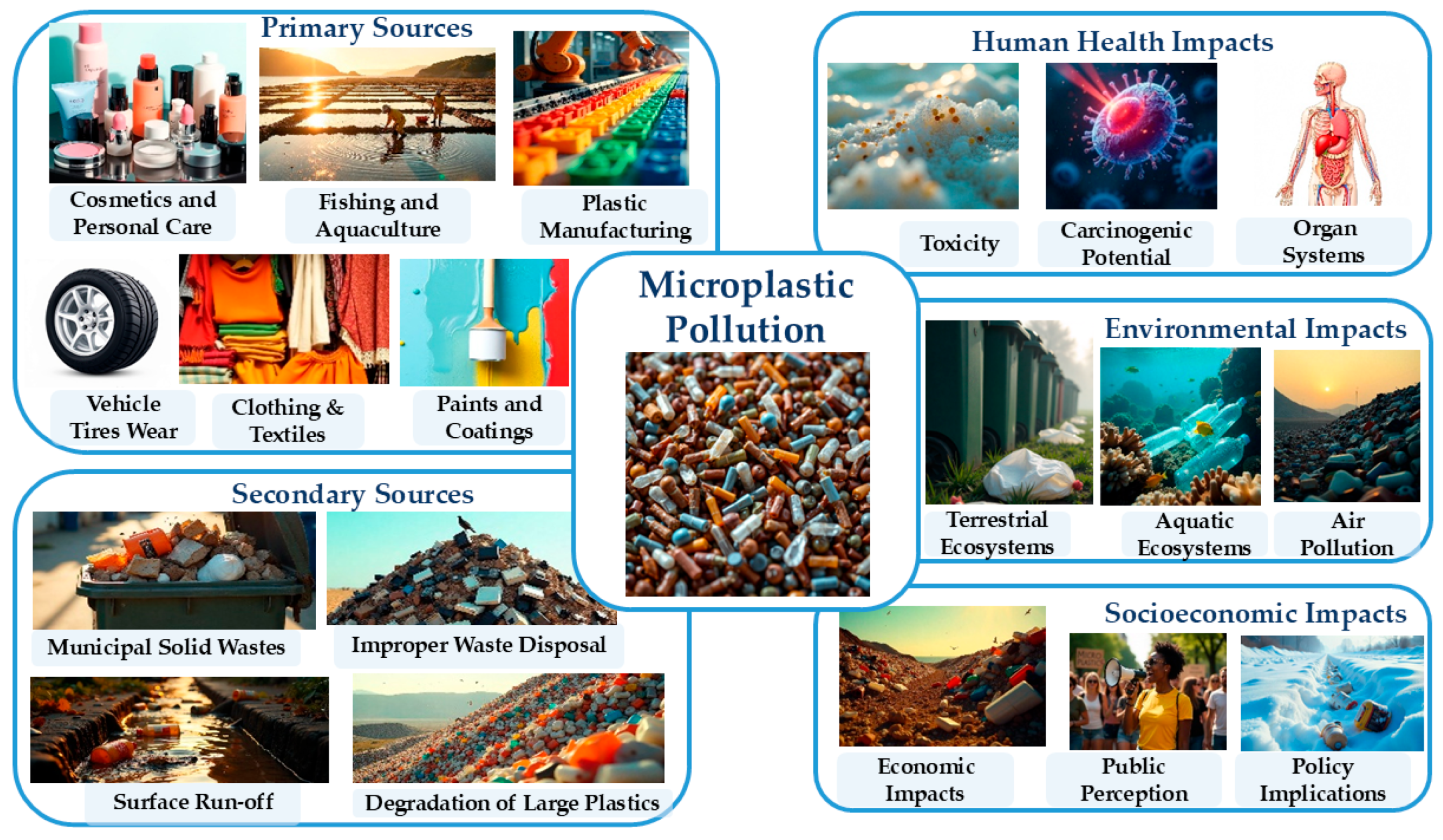
Scientific Article: Nature-Based Solutions for Removal of Microplastics from Wastewater: Technologies, Challenges, and Prospects

Blog

Scientific Article: Nature-Based Solutions for Removal of Microplastics from Wastewater: Technologies, Challenges, and Prospects

A new review highlights how nature-based solutions such as constructed wetlands, green infrastructure, and aquatic plants can remove up to 100% of microplastics from wastewater. The study explores the promise, challenges, and future potential of sustainable, ecosystem-based strategies for tackling one of today’s most pressing pollution threats.
Find Out More
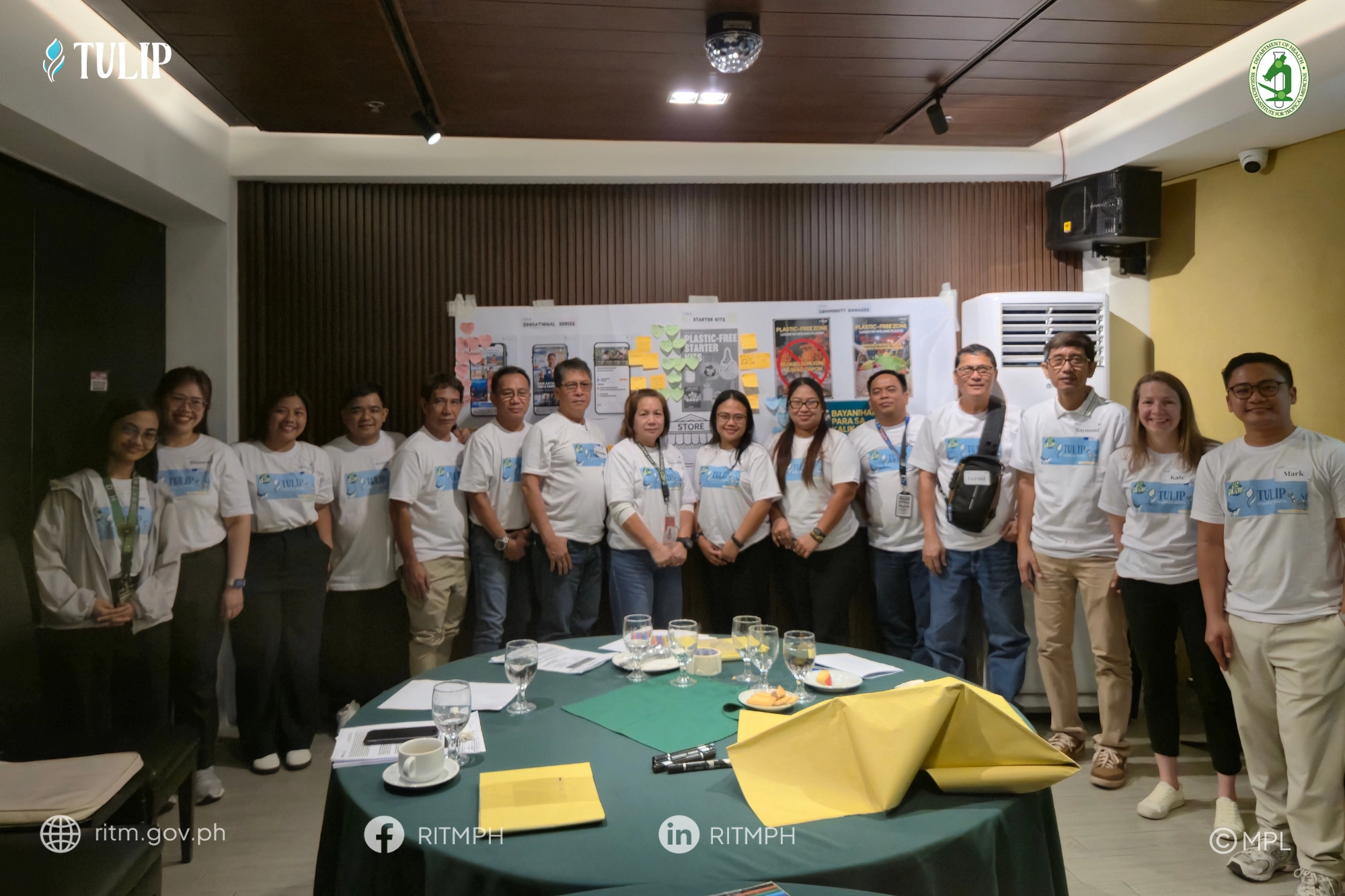
Locals Lead Charge in Co-Designing Solutions to tackle AMR, Plastic Pollution, Climate Change

Blog, Events

Locals Lead Charge in Co-Designing Solutions to tackle AMR, Plastic Pollution, Climate Change

Local stakeholders in Dagupan City joined Project TULIP’s human-centered design workshop to co-create community-based interventions addressing antimicrobial resistance, plastic pollution, and climate change. Through creative feedback, rapid prototyping, and prioritization activities, participants helped shape locally tailored solutions grounded in community needs and planetary health.
Find Out More

Formed By

Back To Top